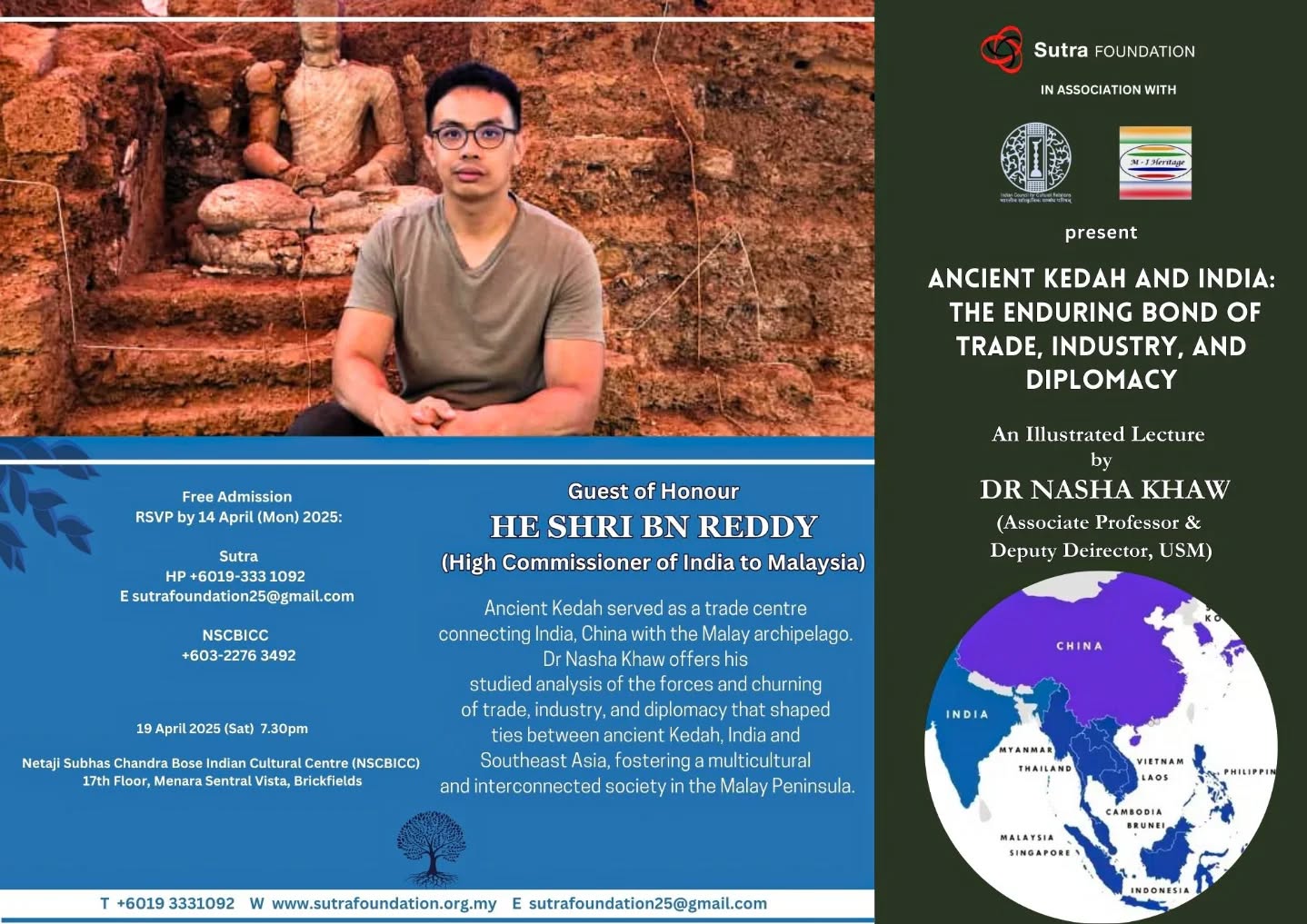
𝑨𝒏 𝑰𝒍𝒍𝒖𝒔𝒕𝒓𝒂𝒕𝒆𝒅 𝑳𝒆𝒄𝒕𝒖𝒓𝒆 𝒃𝒚 𝑫𝒓 𝑵𝒂𝒔𝒉𝒂 𝑲𝒉𝒂𝒘
𝑺𝒖𝒕𝒓𝒂 𝑭𝒐𝒖𝒏𝒅𝒂𝒕𝒊𝒐𝒏 𝒊𝒏 𝒂𝒔𝒔𝒐𝒄𝒊𝒂𝒕𝒊𝒐𝒏 𝒘𝒊𝒕𝒉
𝑵𝒆𝒕𝒂𝒋𝒊 𝑺𝒖𝒃𝒉𝒂𝒔 𝑪𝒉𝒂𝒏𝒅𝒓𝒂 𝑩𝒐𝒔𝒆 𝑰𝒏𝒅𝒊𝒂 𝑪𝒖𝒍𝒕𝒖𝒓𝒂𝒍 𝑪𝒆𝒏𝒕𝒓𝒆 (𝑵𝑺𝑪𝑩𝑰𝑪𝑪),
𝑲𝒖𝒂𝒍𝒂 𝑳𝒖𝒎𝒑𝒖𝒓& 𝑴𝒂𝒍𝒂𝒚𝒔𝒊𝒂-𝑰𝒏𝒅𝒊𝒂 𝑯𝒆𝒓𝒊𝒕𝒂𝒈𝒆 𝑺𝒐𝒄𝒊𝒆𝒕𝒚,
𝒑𝒓𝒆𝒔𝒆𝒏𝒕
𝑨𝒏𝒄𝒊𝒆𝒏𝒕 𝑲𝒆𝒅𝒂𝒉 𝒂𝒏𝒅 𝑰𝒏𝒅𝒊𝒂: 𝑻𝒉𝒆 𝑬𝒏𝒅𝒖𝒓𝒊𝒏𝒈 𝑩𝒐𝒏𝒅 𝒐𝒇 𝑻𝒓𝒂𝒅𝒆, 𝑰𝒏𝒅𝒖𝒔𝒕𝒓𝒚, 𝒂𝒏𝒅 𝑫𝒊𝒑𝒍𝒐𝒎𝒂𝒄𝒚
𝑨𝒏 𝑰𝒍𝒍𝒖𝒔𝒕𝒓𝒂𝒕𝒆𝒅 𝑳𝒆𝒄𝒕𝒖𝒓𝒆 𝒃𝒚 𝑫𝒓 𝑵𝒂𝒔𝒉𝒂 𝑲𝒉𝒂𝒘
19 𝑨𝒑𝒓𝒊𝒍 2025 (𝑺𝒂𝒕) 7.30𝒑𝒎
𝑵𝒆𝒕𝒂𝒋𝒊 𝑺𝒖𝒃𝒉𝒂𝒔 𝑪𝒉𝒂𝒏𝒅𝒓𝒂 𝑩𝒐𝒔𝒆 𝑰𝒏𝒅𝒊𝒂𝒏 𝑪𝒖𝒍𝒕𝒖𝒓𝒂𝒍 𝑪𝒆𝒏𝒕𝒓𝒆 (𝑵𝑺𝑪𝑩𝑰𝑪𝑪) 17𝒕𝒉 𝑭𝒍𝒐𝒐𝒓, 𝑴𝒆𝒏𝒂𝒓𝒂 𝑺𝒆𝒏𝒕𝒓𝒂𝒍 𝑽𝒊𝒔𝒕𝒂, 𝑩𝒓𝒊𝒄𝒌𝒇𝒊𝒆𝒍𝒅𝒔
𝑮𝒖𝒆𝒔𝒕 𝒐𝒇 𝑯𝒐𝒏𝒐𝒖𝒓𝑯𝑬 𝑺𝒉𝒓𝒊 𝑩𝑵 𝑹𝒆𝒅𝒅𝒚 (𝑯𝒊𝒈𝒉 𝑪𝒐𝒎𝒎𝒊𝒔𝒔𝒊𝒐𝒏𝒆𝒓 𝒐𝒇 𝑰𝒏𝒅𝒊𝒂 𝒕𝒐 𝑴𝒂𝒍𝒂𝒚𝒔𝒊𝒂)
Dear Friends,
Archaeologist Dr Nasha Khaw recently created news for his dramatic discovery of a Buddha statue (AD 8th – 9th Century) at Bukit Choras (Bujang Valley), Kedah. For centuries, Kedah served as a nexus in the maritime networks connecting India, China with the wider Southeast Asian region.
This talk by Dr Nasha Khaw explores how trade, industry, and diplomacy shaped the deep historical ties between ancient Kedah and India, fostering a multicultural and interconnected society. The political landscape of ancient Kedah was fluid, adapting to the influence of traders, religious figures, and diplomatic missions while maintaining its regional autonomy.
This historical interconnectivity laid the foundation for the enduring relationship between India and Malaysia, which continues to thrive in the modern diplomacy, trade, and cultural exchange.
By revisiting these historical linkages, we can better appreciate the lasting impact of India’s cultural diplomacy in Kedah and its role in shaping Malaysia’s multicultural identity and strategic global positioning.
This discussion frames ancient Kedah not just as a recipient of Indian influence but as an active participant in a dynamic, reciprocal relationship that continues today.
𝐅𝐫𝐞𝐞 𝐀𝐝𝐦𝐢𝐬𝐬𝐢𝐨𝐧 (𝐋𝐢𝐦𝐢𝐭𝐞𝐝 𝐬𝐞𝐚𝐭𝐬)
𝐑𝐒𝐕𝐏 𝐛𝐲 𝟏𝟒 𝐀𝐩𝐫𝐢𝐥 (𝐌𝐨𝐧) 𝟐𝟎𝟐𝟓:
𝐒𝐮𝐭𝐫𝐚𝐇𝐏 +𝟔𝟎𝟏𝟗-𝟑𝟑𝟑 𝟏𝟎𝟗𝟐
𝐄 𝐬𝐮𝐭𝐫𝐚𝐟𝐨𝐮𝐧𝐝𝐚𝐭𝐢𝐨𝐧𝟐𝟓@𝐠𝐦𝐚𝐢𝐥.𝐜𝐨𝐦
𝐍𝐒𝐂𝐁𝐈𝐂𝐂 +𝟔𝟎𝟑-𝟐𝟐𝟕𝟔 𝟑𝟒𝟗𝟐